 TitanClip
 TitanX
TitanClip
TitanX
TitanX
TitanClip
TitanX
TitanX is where AI agents become digital employees. 34 pre-built agent roles across 7 departments, self-optimizing execution with ReasoningBank trajectory replay, real-time flow visualization, and enterprise security with deny-by-default network policies — your AI workforce, governed and accountable.
Navigate the hardened control plane — from workflow orchestration to network policy enforcement.
Ten pillars of hardened agent infrastructure — from workflow orchestration to tamper-proof audit trails.
Lead agent with MCP tools across 20+ LLM providers. Role-based team hierarchy with automatic delegation, escalation, and chain-of-command governance.
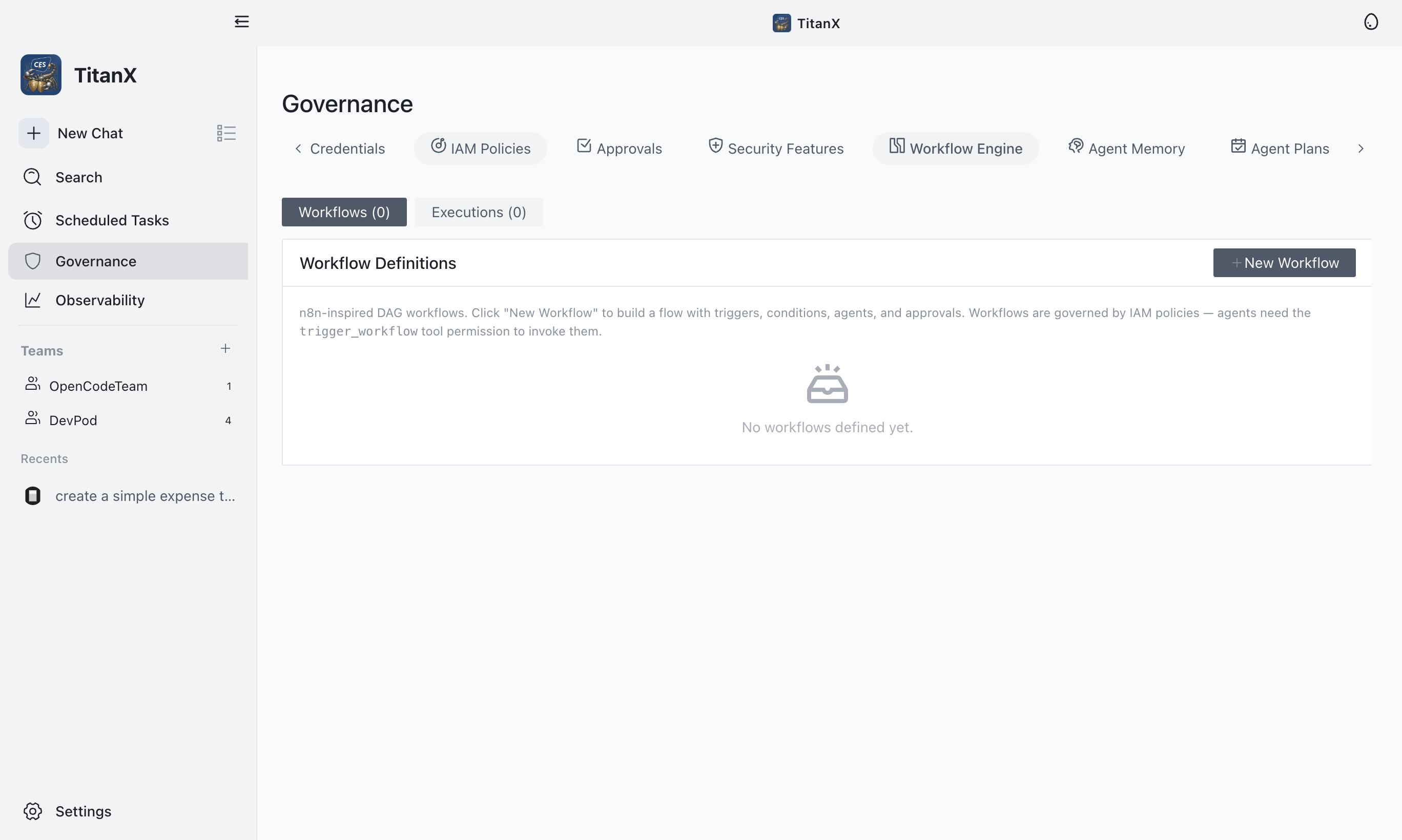
Visual DAG execution with triggers, conditions, human-in-the-loop approvals, and parallel branches. Build complex agent pipelines without code.
Buffer, summary, entity, and long-term memory stores. Agents maintain persistent context across sessions with configurable retention and retrieval strategies.
Structured plans with delegation trees, reflection loops, and goal decomposition. Agents break complex objectives into executable sub-tasks autonomously.
Hierarchical execution traces with token attribution, latency breakdowns, and feedback scoring. Debug agent behavior with full causal chain visibility.
Deny-by-default egress with 11 presets, SSRF protection, RFC1918 blocking, and DNS rebinding defense. Agents only reach what you explicitly allow.
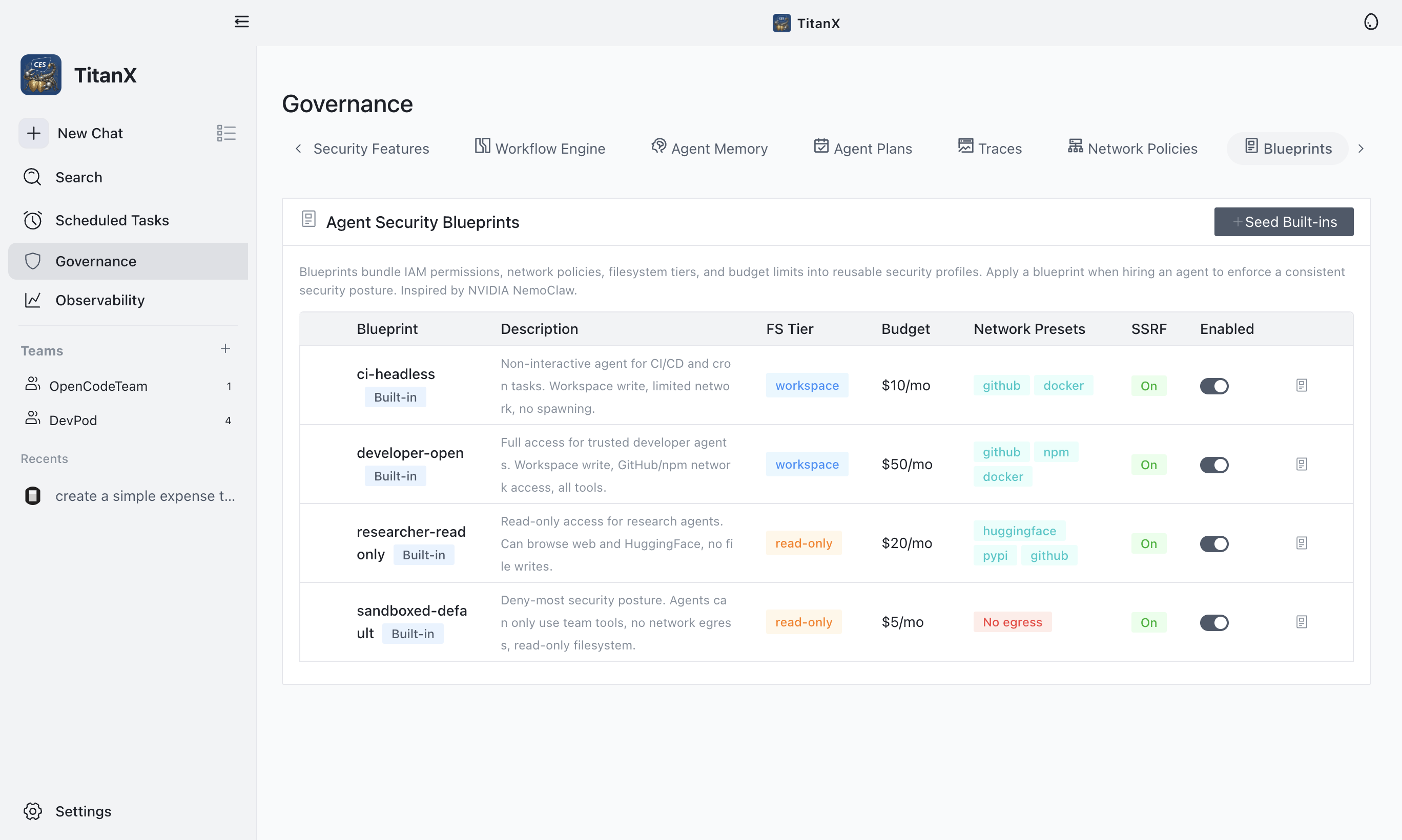
Four security profiles — sandboxed, developer, researcher, and CI — with pre-configured tool permissions, network policies, and filesystem tiers.
Granular tool-level permissions with agent binding. Every tool call is checked against IAM policies at runtime — not just at configuration time.
Tamper-detectable audit trail with 100+ action types, SHA-256 chain integrity, and HMAC signatures. Compliance-ready from day one.
OTLP exporters for spans, metrics, and logs. Ship agent telemetry to Grafana, Datadog, or any OTLP-compatible backend with zero custom instrumentation.
Reduce LLM output tokens 30-75% with intelligent prompt injection. Three modes — Lite, Full, Ultra — with real-time savings tracking and cost projections across providers.
6 hook events (PreToolUse, PostToolUse, Stop) with command, HTTP, and function handlers. Block, modify, or audit every tool execution in real-time.
Store and replay successful execution trajectories. RETRIEVE → JUDGE → DISTILL pattern saves ~32% tokens on repeated tasks. Agents learn from past successes.
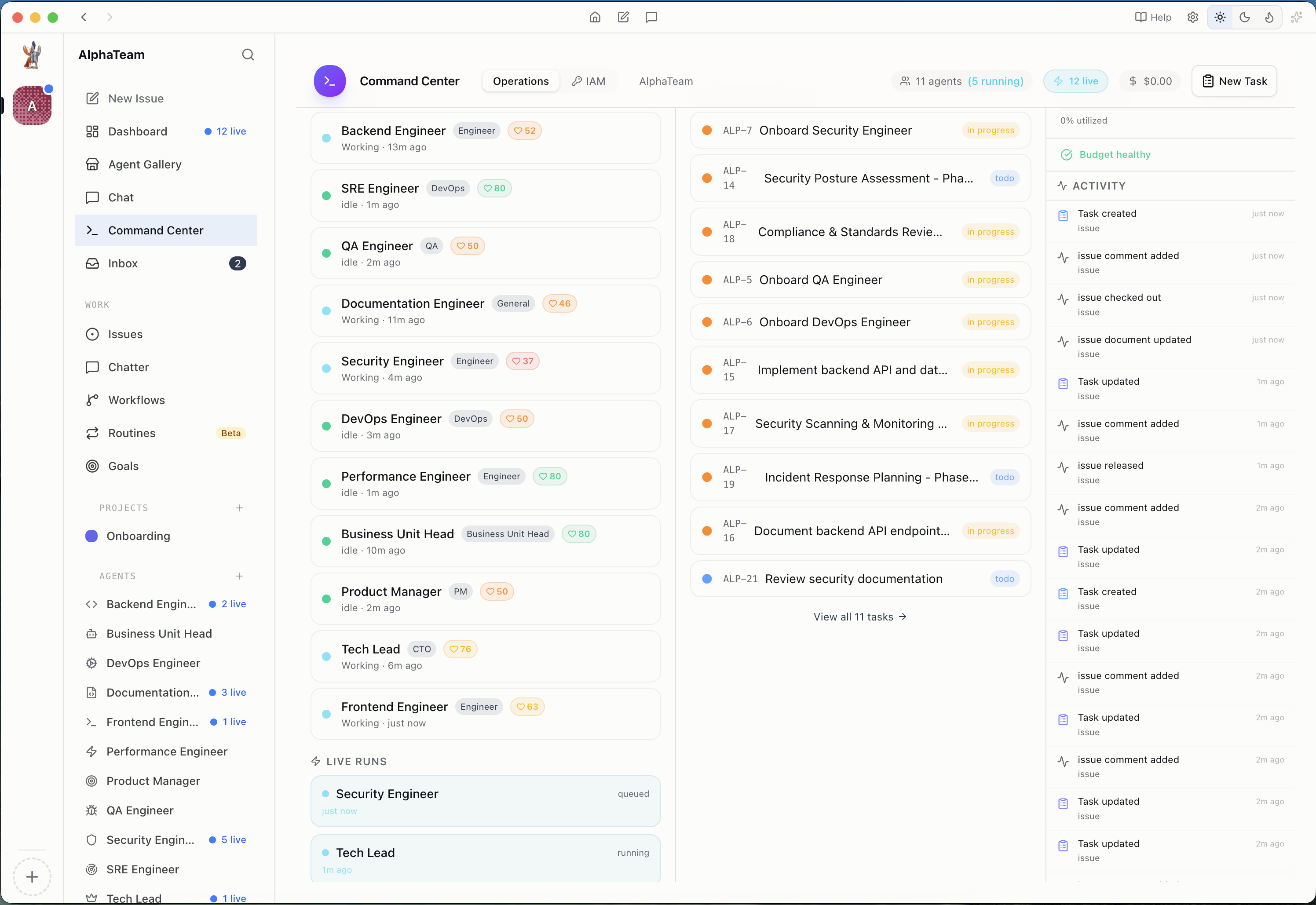
Hierarchical swarm topology with authoritative queen coordinator. Drift detection, checkpoint gates, and consensus validation prevent goal divergence in multi-agent teams.
Pre-built agents across 7 departments — Technical, Sales, Marketing, Research, PM, Operations, Executive. Full templates with AGENTS.md, skills, and heartbeat protocols.
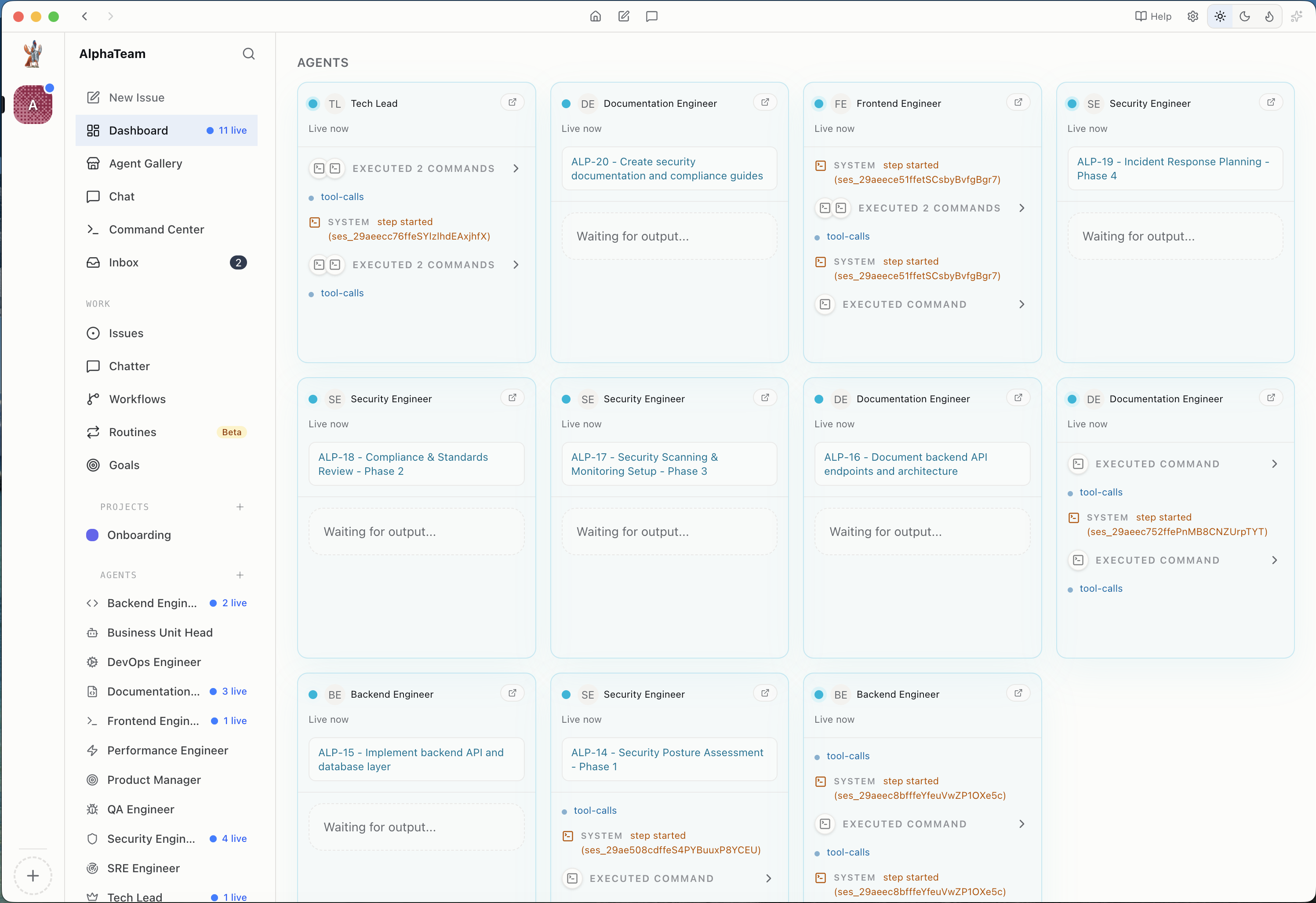
Real-time interactive SVG graph of agent execution. Click nodes to inspect, zoom and pan, team filtering, color-coded actions — full observability into every agent turn.
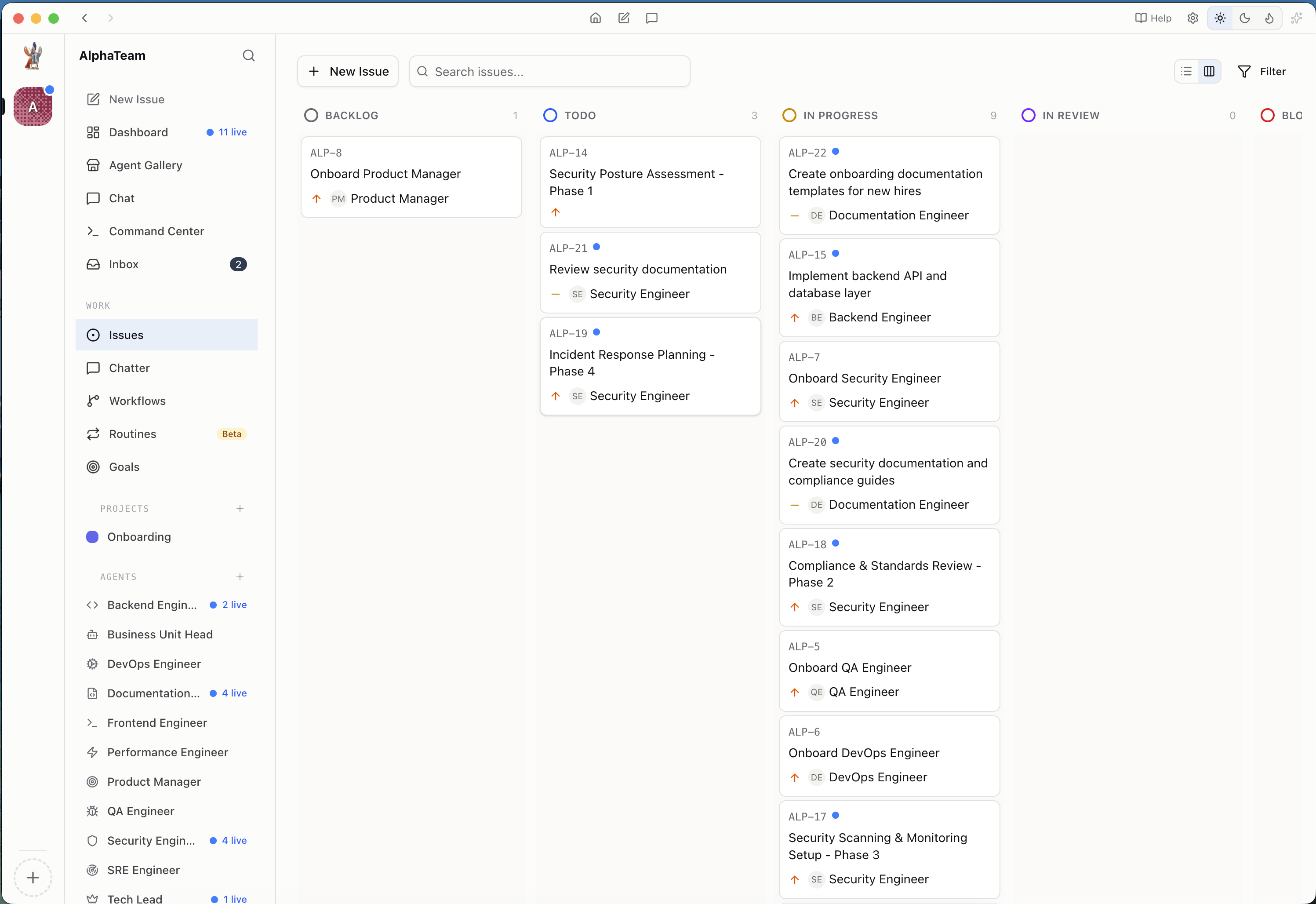
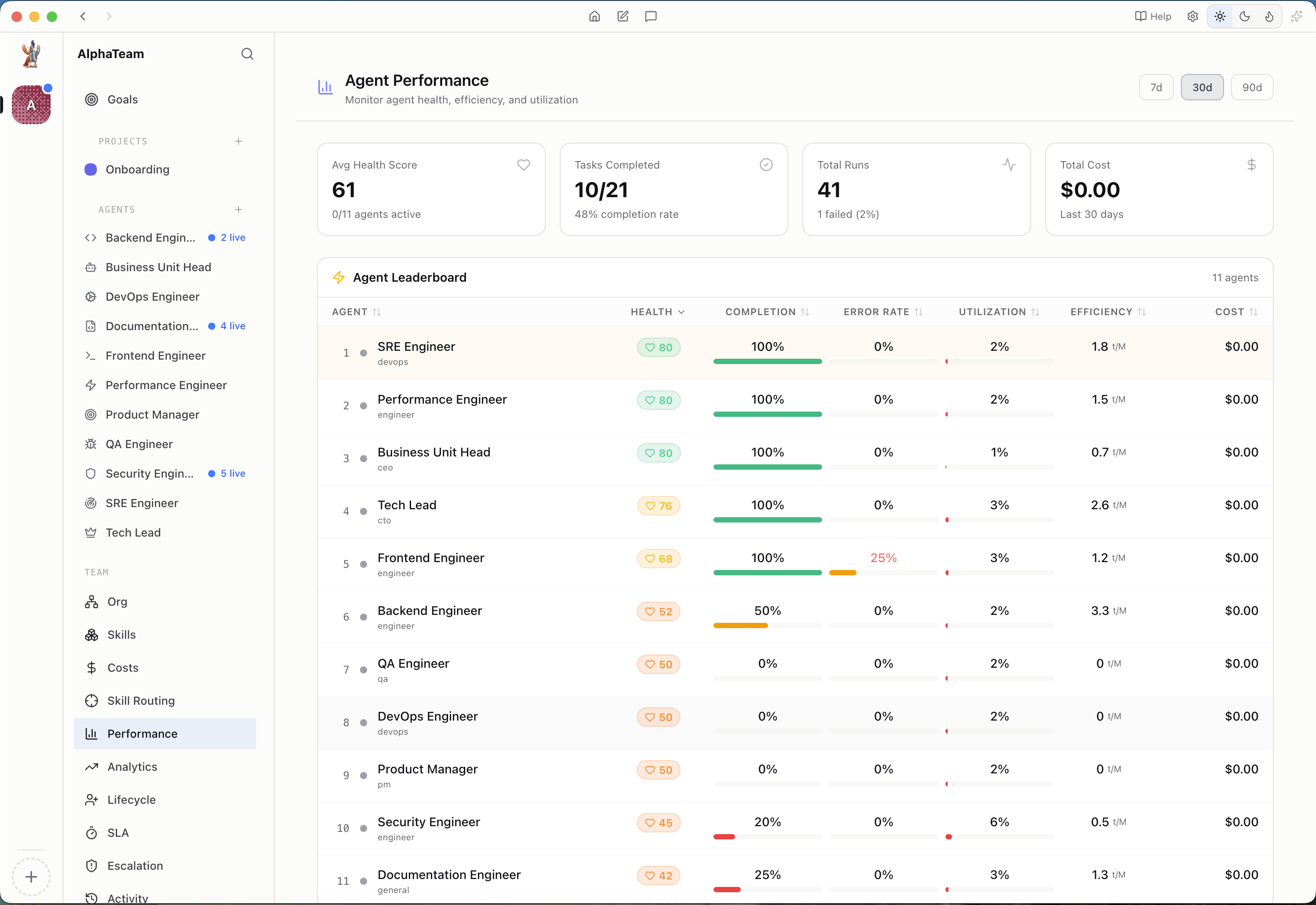
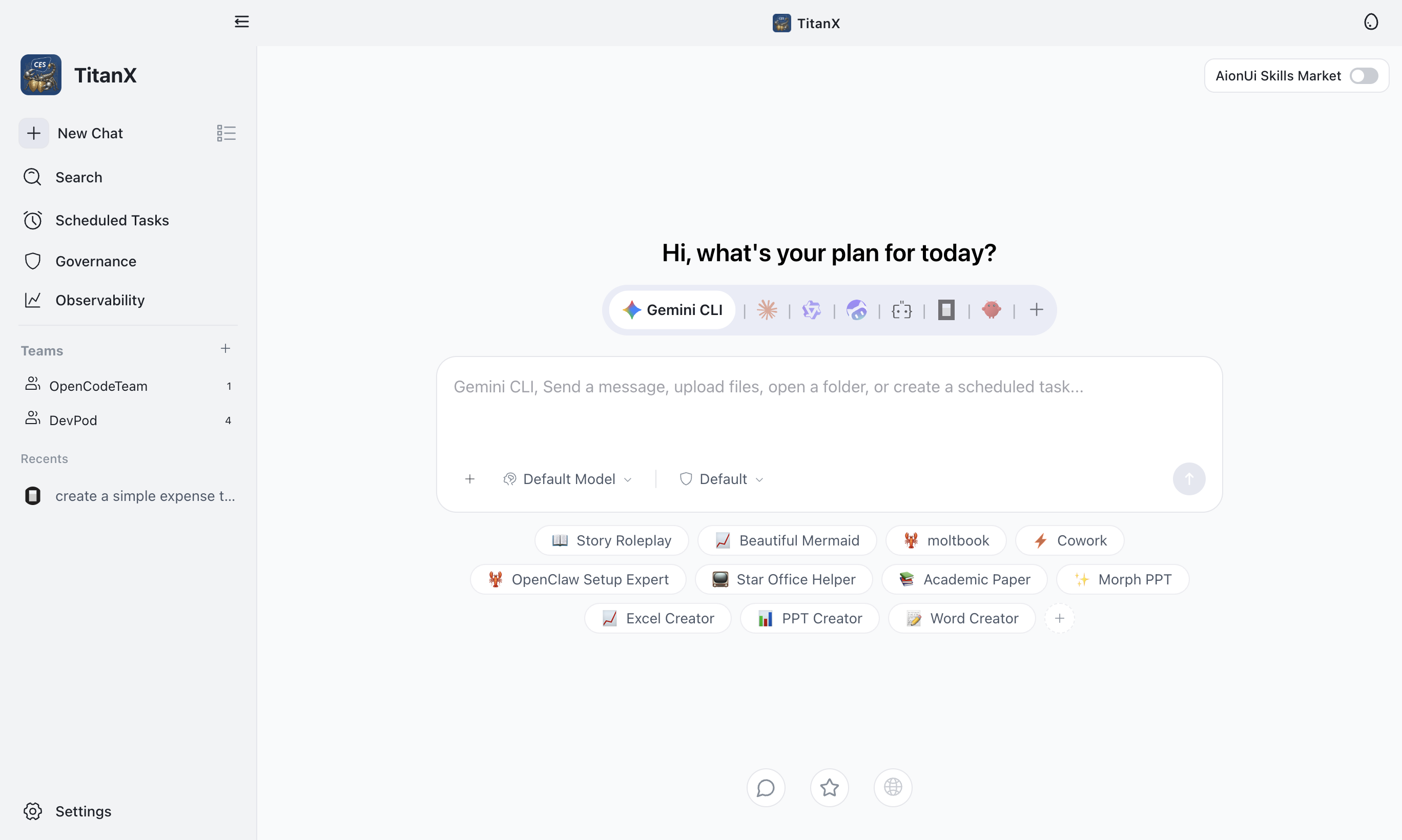
A unified dashboard purpose-built for security-conscious AI operations. Monitor agent health, active workflows, memory utilization, and security posture — all from a single pane of glass with real-time telemetry feeds.
Build complex multi-agent pipelines with a drag-and-drop workflow editor. Triggers, conditions, parallel branches, human approvals, and error handlers — all connected in an n8n-inspired visual canvas.
Pre-configured agent profiles for common deployment patterns. Sandboxed agents for untrusted tasks, developer agents with repo access, researcher agents with web access, and CI agents for automated pipelines — each locked down by default.
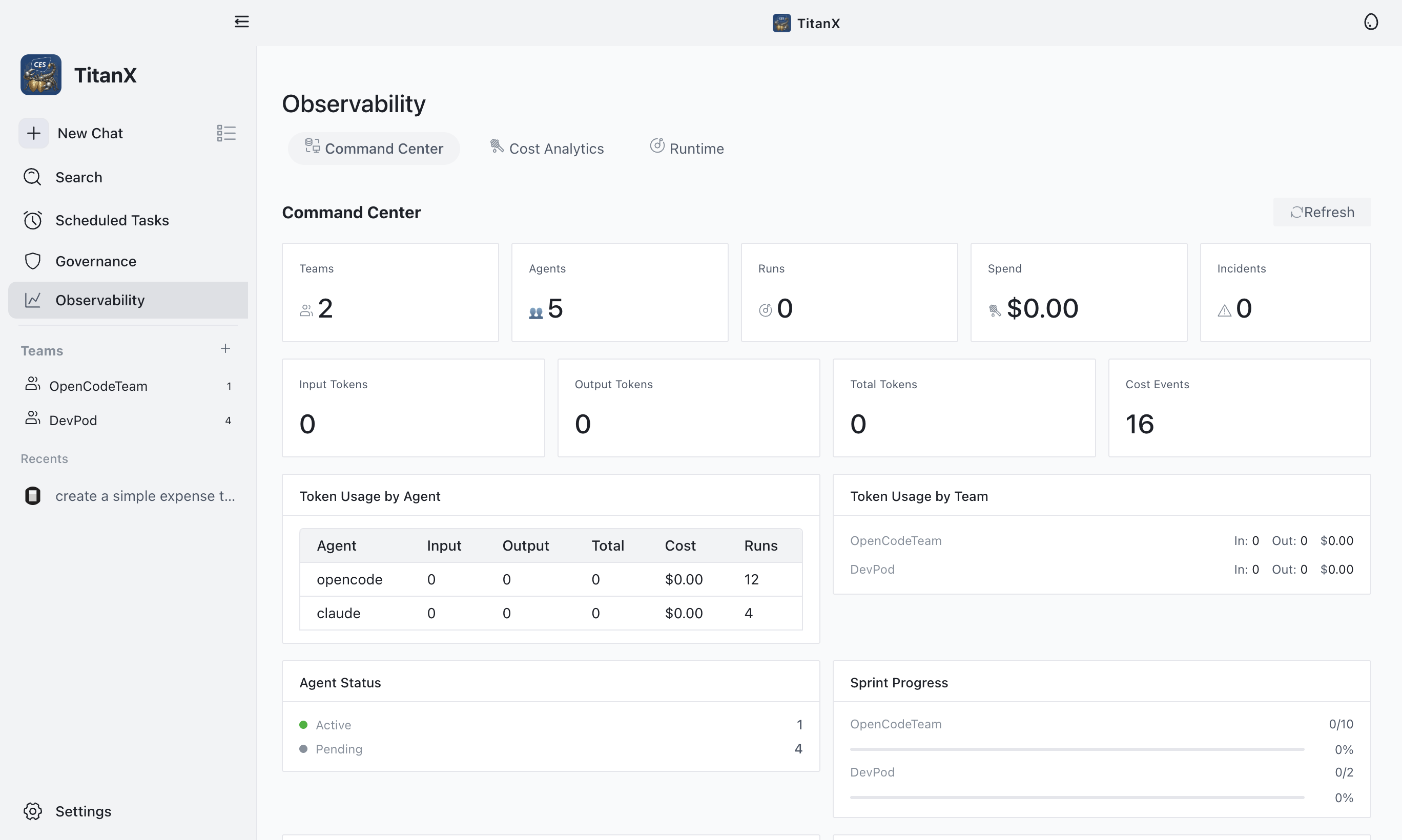
LangSmith-style hierarchical traces with token attribution and latency breakdowns. OpenTelemetry OTLP exporters ship spans, metrics, and logs to your existing observability stack — Grafana, Datadog, or any compatible backend.
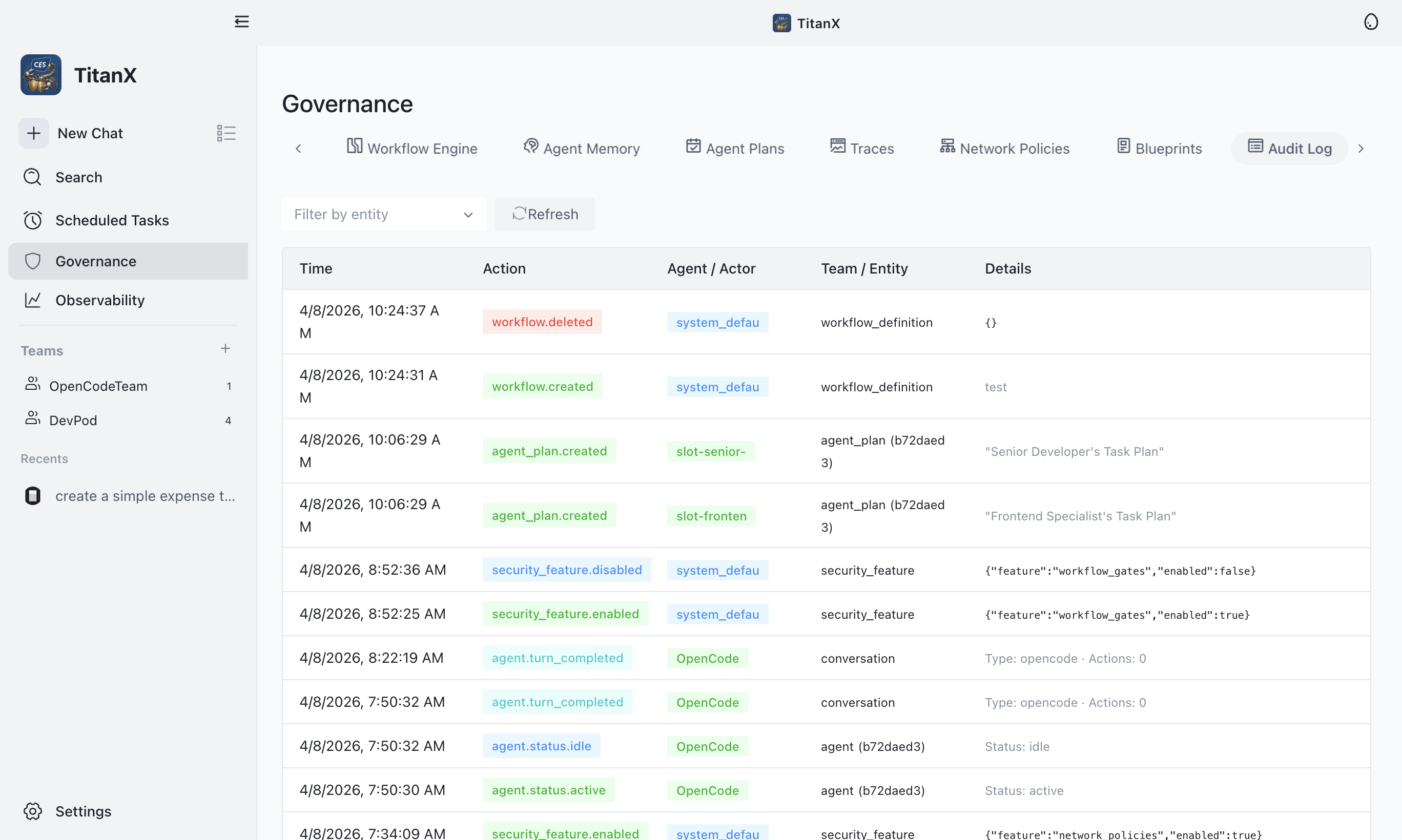
Every governance action is logged with HMAC-SHA256 signatures and chain integrity verification. 100+ action types covering tool calls, credential access, policy changes, and agent lifecycle events. Export to SIEM or compliance systems.
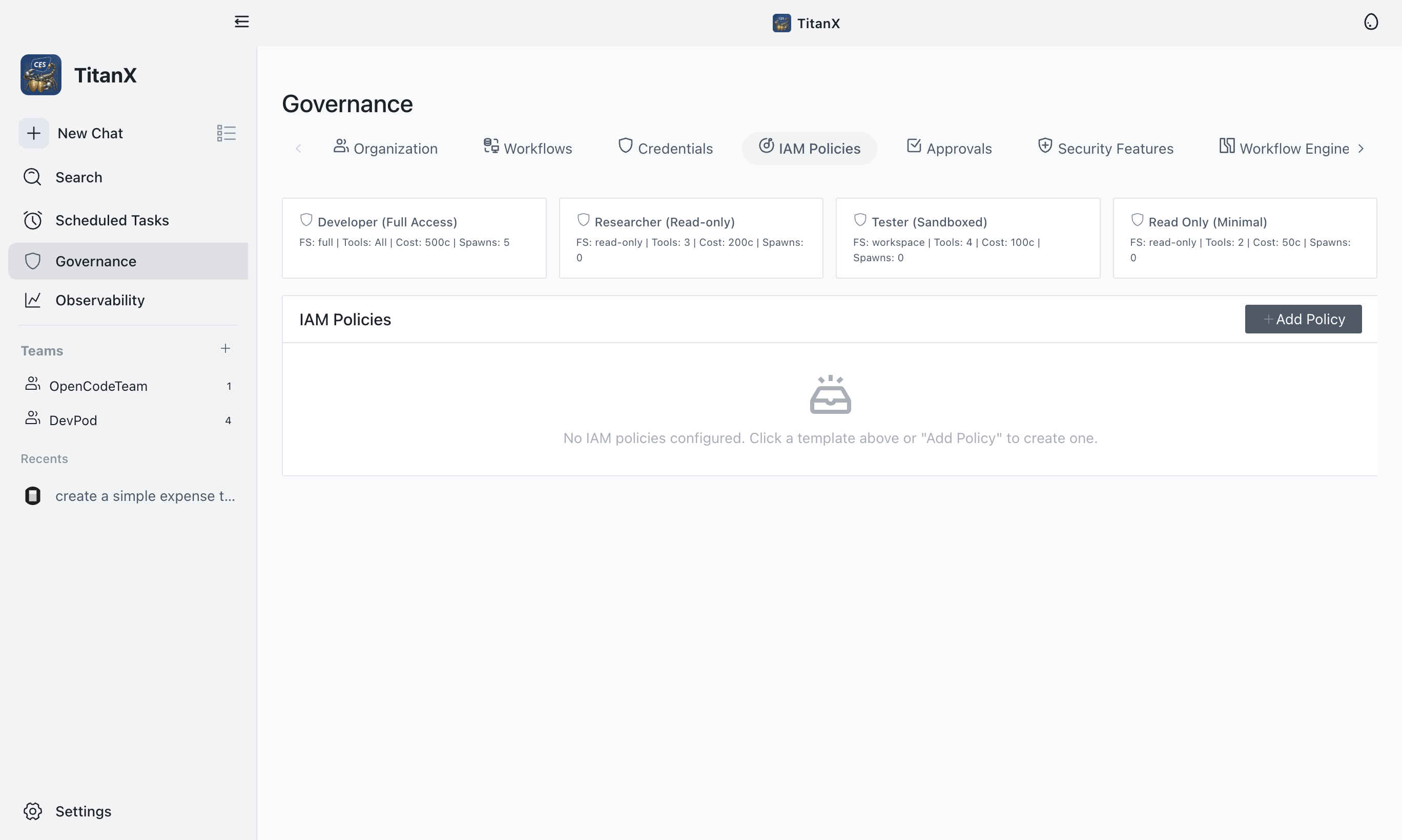
Define tool-level permissions with agent binding, time-based access windows, and conditional rules. The IAM policy engine evaluates every tool invocation at runtime — not just at deploy time — ensuring continuous enforcement.
Watch how TitanX enforces deny-by-default policies, SSRF protection, and runtime IAM checks.
Every agent is untrusted by default. TitanX enforces security at every layer — from network egress to tool invocation — with cryptographic proof and continuous runtime verification.
Every tool call is checked against IAM policies in real-time. Granular permissions per agent, per tool, with time-based access windows and conditional rules.
NemoClaw-inspired network policies block all outbound traffic by default. 11 presets for common patterns. Agents reach only explicitly whitelisted endpoints.
RFC1918 private address blocking, DNS rebinding defense, and cloud metadata endpoint protection. Prevents agents from pivoting to internal infrastructure.
Four agent profiles — sandboxed, developer, researcher, CI — with pre-configured tool access, network policies, and filesystem permissions. Deploy safely in minutes.
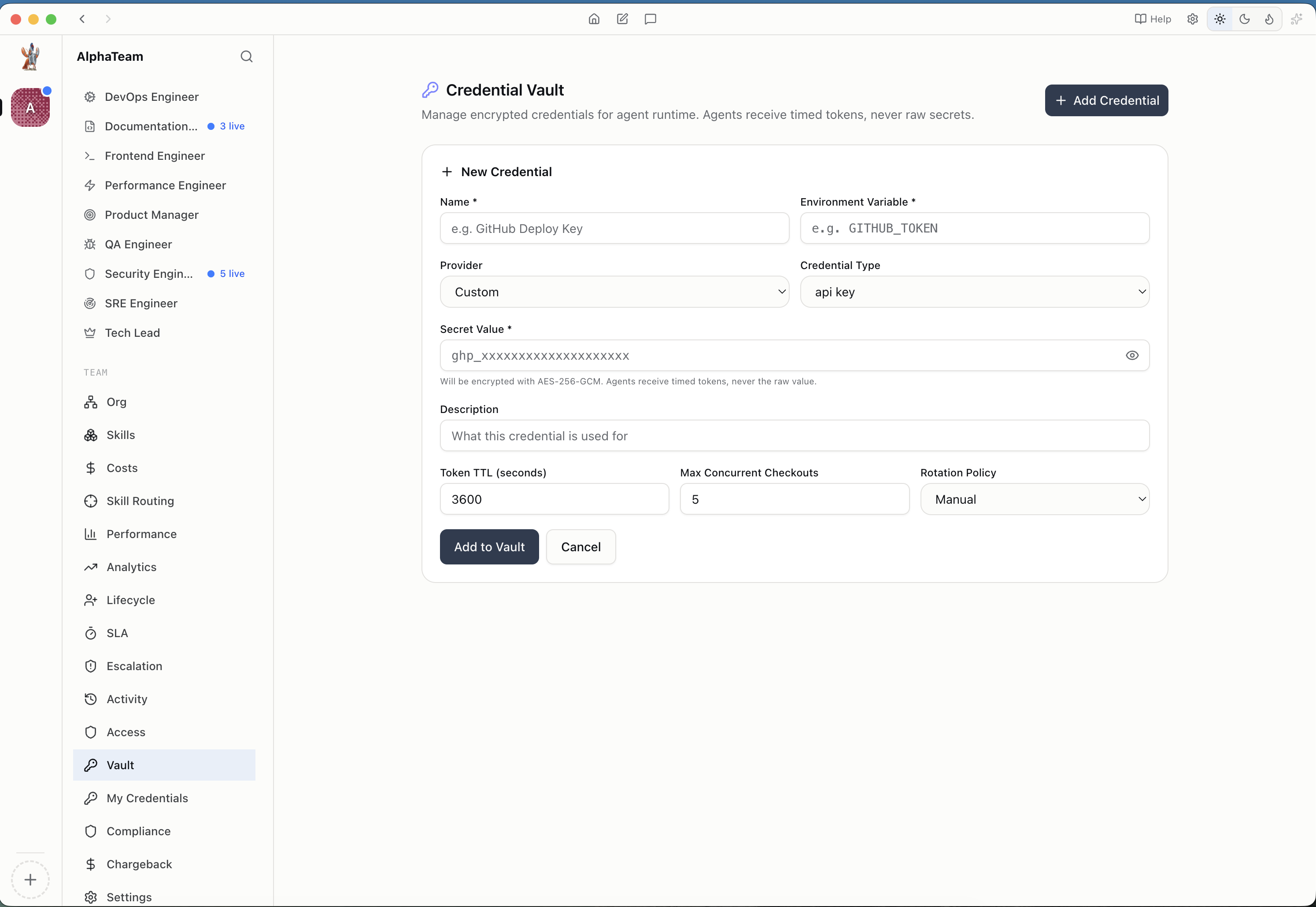
Encrypted credential store with timed token checkout, auto-rotation, and max concurrent limits. Agents receive ephemeral access — never raw secret values.
Auto-revoking session tokens with configurable TTL. When an agent session ends, all associated tokens are immediately invalidated across the system.
Four tiers — none, read-only, workspace-scoped, and full — enforced at the runtime level. Agents cannot escape their designated filesystem sandbox.
Fine-grained feature flags for shell execution, network access, file writes, secret access, and more. Enable exactly what each agent needs — nothing more.
| Capability | Description |
|---|---|
| Workflow Engine | n8n-inspired visual DAG orchestration with triggers, conditions, approvals, parallel branches, and error handlers. |
| Agent Memory | LangChain-style buffer, summary, entity, and long-term memory with configurable retention strategies. |
| Planning System | DeepAgents-inspired structured plans with delegation trees, reflection loops, and autonomous goal decomposition. |
| Execution Traces | LangSmith-style hierarchical traces with token attribution, latency breakdowns, and feedback scoring. |
| Network Policies | NemoClaw deny-by-default egress with 11 presets, SSRF protection, and DNS rebinding defense. |
| Agent Blueprints | Four security profiles (sandboxed, developer, researcher, CI) with pre-configured permissions. |
| IAM Policies | Granular tool-level permissions with agent binding and continuous runtime enforcement. |
| HMAC Audit Logs | Tamper-detectable audit trail with SHA-256 chain integrity and 100+ action types. |
| OpenTelemetry | OTLP exporters for spans, metrics, and logs — ship to Grafana, Datadog, or any compatible backend. |
| Security Toggles | 10 fine-grained feature flags for shell, network, filesystem, secrets, and tool access control. |
| Caveman Mode | Token-saving prompt injection (Lite/Full/Ultra) reduces output 30-75%. Real-time savings tracking with cost projections across 7 LLM providers. |
| Agent Hook System | 6 hook events with command/HTTP/function handlers. Block, modify, or audit tool execution. Extensible plugin architecture for custom behaviors. |
| ReasoningBank | Trajectory storage and replay for successful executions. RETRIEVE → JUDGE → DISTILL pattern saves ~32% tokens on repeated tasks. |
| Queen Mode | Hierarchical swarm coordinator with drift detection, checkpoint gates, and consensus validation for multi-agent teams. |
| 34 Agent Gallery | Pre-built agents across 7 departments (Technical, Sales, Marketing, Research, PM, Ops, Executive) with full template configurations. |
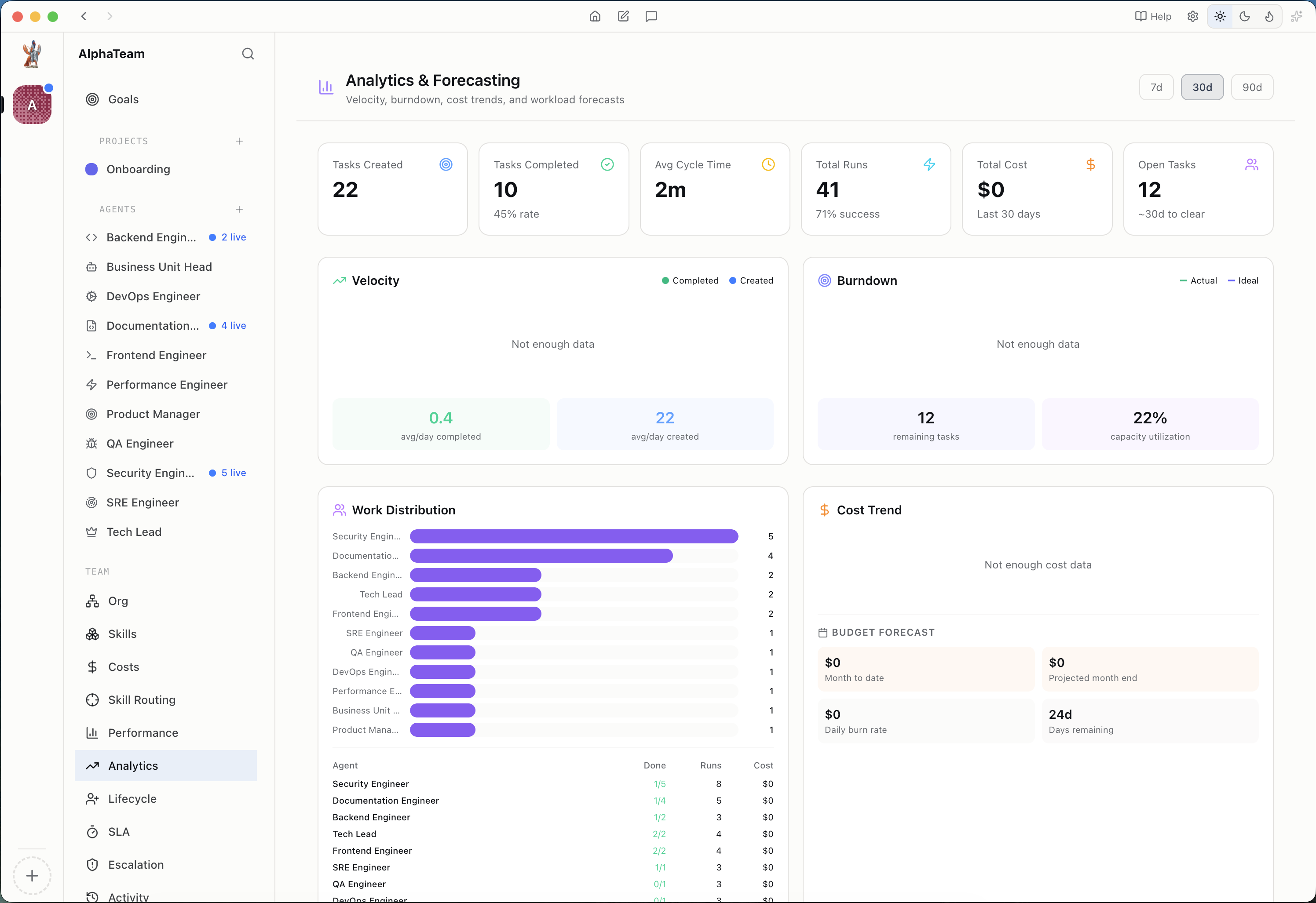
| Live Flow Visualizer | Real-time interactive SVG graph of agent execution events with click-to-inspect, zoom/pan, team filtering, and color-coded actions. |
| Sprint Analytics | Burndown charts, agent utilization, velocity tracking, and KPIs for sprint-level observability into agent team performance. |
| Cost Projections | Token usage over time, multi-provider cost estimates, regular vs caveman cost comparison charts with projected monthly savings. |